

At a Glance
-
Plan less: for 10 days, stick to 2 cities, maybe 3 if nearby, to avoid losing time to transit.
-
Go slower: Italy rewards wandering and neighborhoods more than a sightseeing checklist.
-
Best timing: September–early October are warm and less crowded; July–August can be hot and packed.
-
Build days around meals. Book major museums early and reserve top sights ahead.
-
Use trains between big cities. Carry some cash and choose central neighborhoods to cut taxis.

Most first-timers try to cram Rome, Florence, Venice, the Amalfi Coast, and maybe Cinque Terre into ten days. The result is a trip spent mostly on trains and in taxi queues, with a few rushed photos in between. Planning an Italian itinerary without stress means doing less and doing it well. Two cities in ten days. Maybe three if they’re close.
Italy rewards slowness. It punishes checklists. The sooner you accept you won’t see everything on your first trip, because you will go back, the sooner you start building something worth remembering. Here’s what to know before traveling to Italy for the first time, with a framework for deciding where to go, how long to stay, and what to skip.
Pick Two or Three Places
A stress-free Italy itinerary starts with a hard limit on destinations. For a 10-day trip, visiting two cities and one smaller town is ideal.
Rome and Florence with a day trip to a Tuscan hill town. Or Venice and Bologna with an overnight in Ravenna. The high-speed Frecciarossa train connects Rome to Florence in about 90 minutes and Rome to Naples in roughly 70 minutes, so you don’t need to fly between them.
The temptation to add “just one more stop” is the single biggest mistake. Every additional destination costs you a half-day of packing, checking out, transferring, checking in, and reorienting. That’s time you could spend walking through the Trastevere neighborhood at dusk or sitting in a piazza with a Negroni while the light turns gold.
Skip Venice on a first trip if you’re already going to Rome and Florence. It deserves its own dedicated visit.
When to Go
The best time to travel to Italy depends on what you can tolerate. July and August bring crowds and temperatures above 35°C (95°F) in Rome, Florence, and southern Italy. The Colosseum at 2 pm in August is not a memory you want.
Season | Temperature Range | Crowd Level | Best For |
|---|---|---|---|
April–May | 15–24°C (59–75°F) | Moderate | Florence, Rome, Amalfi Coast |
June | 22–30°C (72–86°F) | High | Northern Italy, Dolomites |
September–October | 18–27°C (64–81°F) | Moderate | All regions, harvest season |
November–March | 5–14°C (41–57°F) | Low | Rome, Naples, Sicily (mild winters) |
September and early October are the nicest periods. Warm enough to eat outside, cool enough to walk all day. The vendemmia grape harvest is underway in Tuscany and Piedmont, and summer’s crowds have thinned.
If you’re set on the Amalfi Coast as part of a broader Italian vacation, late September gives you Positano without the shoulder-to-shoulder foot traffic on its narrow staircases.
Build Your Days Around Meals, Not Monuments
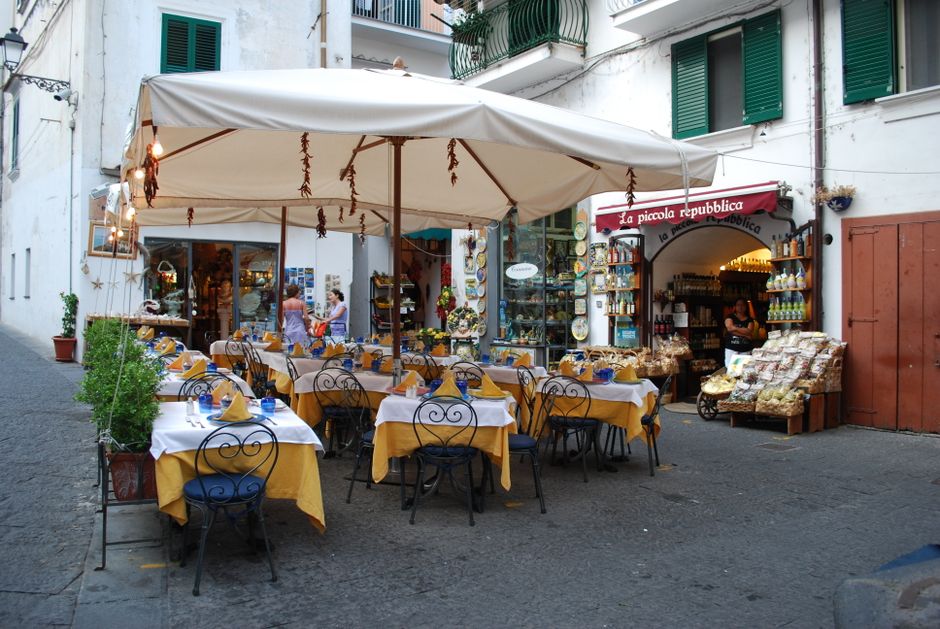
The Italian travel tip for first-timers that changes everything is to structure your days around lunch and dinner, not around museum schedules. Italians eat lunch between 12:30 and 2:00, and dinner is rarely before 8:00 pm. The day’s rhythm follows food, not sightseeing.
Book your big museum visit: the Uffizi, the Vatican Museums, and the Borghese Gallery for early morning, when lines are shortest and the light through the galleries is best. Then eat a proper sit-down lunch. Then rest, walk, and get lost in a neighborhood. Then aperitivo. Then dinner.
A realistic day in Rome might look like this:
-
8:30am: Vatican Museums, pre-booked timed entry
-
12:00pm: Walk to the Prati neighborhood for lunch at a trattoria
-
2:00–4:30pm: Rest at the hotel or wander the streets near Castel Sant’Angelo
-
5:30pm: Aperitivo near Piazza Navona
-
8:30pm: Dinner in the Jewish Quarter
That’s one “attraction” and an entire day that feels full. The smell of espresso from a bar at 7am, the sound of a fountain echoing off stone walls in an empty piazza at 3pm. These are the moments that stick.

What to Know Before Traveling to Italy
Some practical things that trip up first-timers:
Trains work. Trenitalia’s Frecciarossa and Italo offer fast connections, with lower fares often available when booking ahead. Book once your travel dates are firm, as the cheapest tickets are limited. Italo advertises Rome-to-Florence fares from €14.90, depending on the departure and availability.
Cash still matters. Smaller restaurants, gelaterias, and market vendors in southern Italy and rural areas may not accept cards. Carry €50–100 in cash daily.
Hotels in the right neighborhood save your trip. In Rome, staying near the Pantheon or in Monti puts you within walking distance of most things. In Florence, the Oltrarno, the south side of the Arno, is quieter and more residential than the tourist center. A well-chosen hotel in the right neighborhood eliminates the need for taxis and gives you a local rhythm from the start.
Reservations are not optional for top sights. The Borghese Gallery in Rome requires advance booking. The Uffizi in Florence sells out days in advance during peak season. The Last Supper in Milan requires reservations weeks in advance for its 15-minute viewing slots.
An Easy Itinerary for Traveling in Italy the First Time
Most online “sample itineraries” pack in too much. Here’s one that’s more reasonable.
Days 1–4: Rome Arrive, adjust. Day 1 is just your neighborhood. Days 2–4: The Forum and Palatine Hill. Allow 3 hours. The Pantheon admission is €7, and no advance reservation is required for a Trastevere dinner. One museum day. One day with no plans at all.
Day 5: Train to Florence (90 minutes). Check in. Walk to Ponte Vecchio. Eat.
Days 6–8: Florence The Uffizi on one morning. San Lorenzo Market for leather goods and lampredotto, a local tripe sandwich. A day trip to San Gimignano or Siena, both about 75 minutes by bus. The Oltrarno neighborhood is for artisan workshops and quieter streets.
Days 9–10: Departure from Florence or add a night in Bologna, 35 minutes by train, which has better food than Florence. If food is a priority, you could spend the final two nights in Bologna. Otherwise, stay in Florence and keep the trip to two bases.
This easy itinerary for traveling in Italy covers two of the most important cities without the frantic pace that turns a vacation into a logistics exercise. Solay Travel builds itineraries with private guides and local experiences structured around this kind of pacing.

How to Plan an Italian Vacation Without Stress
The difference between a good trip and a forgettable one usually comes down to how much decision-making you do while you’re there. A stress-free Italy itinerary front-loads the decisions. Hotels booked, key reservations confirmed, train tickets purchased, and a short list of restaurants for each city.
That doesn’t mean rigidity. It means structure where it matters. The hotel, the museum entry, the one dinner you really care about, and freedom everywhere else. An afternoon with nothing scheduled isn’t wasted time. It’s the afternoon you find the gelateria three blocks from your hotel that nobody wrote about online.
For travelers who’d rather hand the logistics to someone with direct relationships, working with a Solay Travel advisor means one point of contact for the entire trip, from planning the hotel locations, transfers, guides, and advance reservations based on how you want to spend your days. We settle the important logistics before departure and leave room for plans to change.
Skip the Checklist Mindset
Italy has 62 UNESCO World Heritage Sites, more than any other country. You will not see them all. You shouldn’t try. On a first trip, the top sites to see in Italy are those that match your interests, not a ranked list from a travel aggregator.
If you love art, Florence and Rome will keep you busy for a month. If food is the priority, Bologna and Naples are stronger choices than Venice. If you want coastline and warmth, the Amalfi Coast or Sicily as part of a tailored package makes more sense than splitting time between four inland cities.
The idea is to choose based on what you care about, not what you think you’re supposed to see.
Italy rewards return visits. A first trip built around two or three destinations, realistic daily pacing, and advance reservations for what matters gives you the texture that rushed itineraries miss. Planning a stressless Italian itinerary is less about seeing the right things and more about leaving enough room to notice them. The best first trip to Italy is the one that makes you start planning the second before you’ve left.
