

At a Glance
-
Madrid’s neighborhood markets are everyday hangouts for locals, mixing tradition with modern updates.
-
Mercado de San Ildefonso is lively and social, with global bites, cocktails, and late-night energy.
-
Mercado de Antón Martín stays under-the-radar, pairing serious food with a local, artsy feel.
-
Los Mostenses is old-school and unpolished, from classic tapas to a small, high-end tasting counter.
-
Mercado de la Paz reflects upscale Salamanca: polished stalls, shopping, and quality groceries.

Madrid’s 46 public markets are the city’s real dining rooms. Not the Michelin-starred ones or the tourist-facing tapas bars along Gran Vía, but the neighborhood mercados where retirees stop for vermouth at 11 a.m. and families split croquetas at tables wedged between a fishmonger and a florist. To explore Madrid’s street markets, the answer is simple: go where the locals already are. Madrid neighborhood markets have operated in many cases since the mid-19th century, and they remain the most honest way to eat in this city.
The mercado tradition here is older than most of the restaurants tourists line up for. And while gentrification has reshaped some of these spaces, fruit stands replaced by cocktail bars, chalkboards swapped for LED menus, the best markets still function as neighborhood crossroads. They smell like grilled peppers and fresh bread. They sound like a dozen conversations layered over clinking glasses.
Malasaña Food Market and the Party at San Ildefonso
The Mercado de San Ildefonso sits on the border of Malasaña and Chueca, two neighborhoods with deep roots in Madrid’s nightlife and arts scenes. This privately owned, three-story market is one of the best markets in Madrid for anyone who wants to eat well and stay late. It opens early enough for families, but by 7 p.m. on a Saturday, a live DJ is playing, drink tickets are circulating, and the energy shifts.
The ground and second floors hold food stalls. Basque pintxos at Cult Café. Grilled Iberian meats at La Boutique del Ibérico. A whole stand devoted to croquetas, which, honestly, is reason enough to visit. Upstairs, a cocktail bar with a terrace.
La Arepera. A sampler of three Venezuelan arepas (stuffed cornmeal pockets with meat, cheese, black beans, plantains, or avocado) runs about €15.50. It’s filling enough to keep you moving for hours. The Malasaña food market scene doesn’t start and end at San Ildefonso, but it’s the loudest, most social entry point. The DJ can be a bit much before 8 p.m. But the crowd is genuinely mixed. Older Madrileños, students, tourists, and neighborhood regulars.
This is also a strong starting point if you’re figuring out what to find in Madrid markets, because the range here, from Venezuelan street food to Basque small plates, gives you a compressed tour of Spain’s and Latin America’s culinary diversity in a single building.
Antón Martín: The Market Most Tourists Walk Past
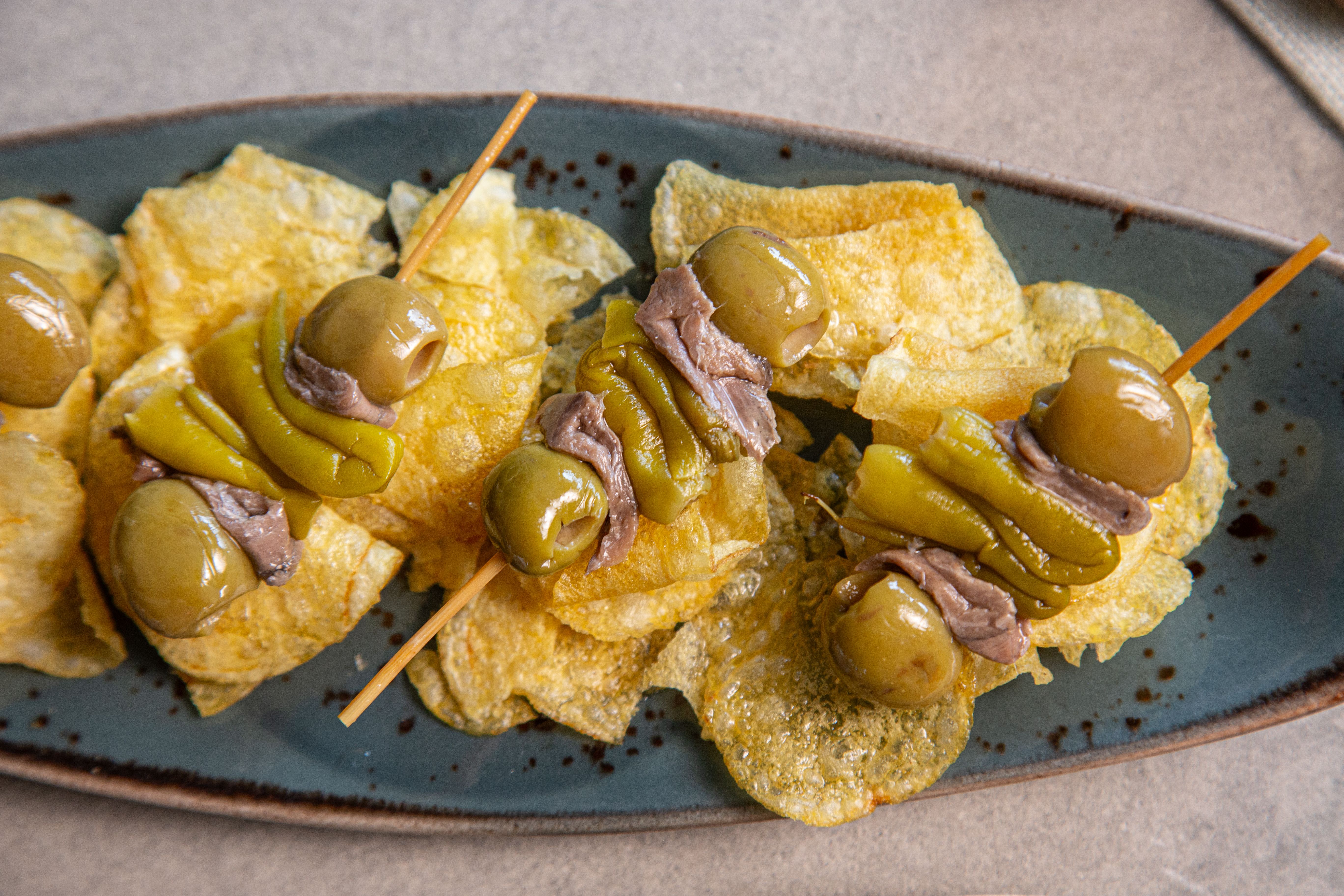
Mercado de Antón Martín is within a 10-minute walk from Madrid’s main railway station and the Plaza Mayor, but you’ll find almost no tourists inside. The building itself won’t win any design awards. That’s part of the appeal.
Locals take vermouth breaks at Donde Sánchez between errands. On the third floor, the Amor de Dios flamenco school holds classes, and you can hear the footwork from below. And the food is serious. Sincio, one of several more refined restaurants in the market, serves a beef loin paella with sweet peppers for around €24 and candied leeks with ground hazelnuts and Catalan romesco sauce for €18. Doppelgänger, a Spanish-North African fusion spot, does a Morocco Pie, a spiced-lamb pastry with meringue and lemon gel, €18.
After eating, walk half a block to Cine Doré, Madrid’s famous arthouse cinema. This is how the food specialties in Madrid’s neighborhood markets connect to the rest of the day. You eat, you wander, and you find something you weren’t expecting.
Los Mostenses: A Block Off the Gran Vía, a World Apart
The Mercado los Mostenses sits one block from the Gran Vía. Originally built in 1875 on the site of a demolished convent, it looks like what most Madrid local markets probably looked like 30 years ago. Mop-streaked floors, produce crates in the aisles, and daily menus on chalkboards.
The standout is Rapaz, a Basque fusion restaurant with 12 seats. The rotating eight-course tasting menu, around €55, includes chipirones in smoked corn sauce, braised pork snout with fire-roasted red peppers, and a quince tart with idiazabal cheese. Twelve seats. No reservations app. You just show up.
But the real texture of Los Mostenses is at places like Verdiblanco, which has served basic tapas and drinks to working-class locals for generations. Young families still come here to eat and talk to the same stallholders their grandparents knew. If you’re looking for Madrid artisanal markets with polish and Instagram appeal, this isn’t it. If you want to sit at a counter and eat something a grandmother would approve of, this is your place.
Mercado de la Paz: Salamanca’s Polished Side

In the Salamanca district, Mercado de la Paz is the market for people who like their fresh food markets Madrid experience with a sharper aesthetic. Even the vegetable stands here look like they belong in a department store. Florists, a laundry service, and old-school grocers share the hall with restaurants like Matteo, Italian specialties, and Harina, a bakery with meringues the size of your head and cookies oozing dulce de leche.
This is one of the top shopping spots in Madrid neighborhoods if you want to combine food with browsing. Salamanca is Madrid’s most upscale barrio, and La Paz reflects that without losing the mercado feel entirely. You’ll still see locals buying fish for dinner. The difference is the lighting.
How Madrid Street Markets Fit Into a Real Trip
Madrid street markets and covered mercados aren’t attractions you schedule between museums. They’re how you structure a morning or an evening. Arrive hungry. Order at two or three stalls. Sit at a communal table. The best markets in Madrid work because they’re social infrastructure, not food courts.
A few practical notes:
-
Most markets open by 9 or 10 a.m. and close by 2 or 3 p.m. for the traditional lunch break. Some reopen in the evening, especially the ones with restaurants and bars.
-
Saturday mornings are the busiest and the best for atmosphere.
-
Cash is still useful at older stalls, though card payments are increasingly common.
-
The Rastro flea market, Sundays in the La Latina neighborhood, is Madrid’s most famous street market for non-food browsing: vintage clothing, antiques, and a lot of junk you’ll enjoy sifting through.
If you’re planning a trip that includes Madrid artisanal markets alongside museums, restaurants, and day trips, the sequencing matters. A guided food tour through a neighborhood market can reframe how you eat for the rest of the trip. And a travel advisor who knows Madrid’s barrios can steer you toward markets that fit your pace and tastes, instead of defaulting to whatever three spots every guidebook repeats.
What These Markets Tell You About Madrid
Madrid’s mercados are the city’s autobiography. The older ones, like Los Mostenses, show you what daily life looked like before supermarkets and delivery apps. The newer ones, like San Ildefonso, show you where the city is heading. And the ones in between, like Antón Martín, show you the tension: tradition and modernization sharing a corridor, sometimes uneasily.
The food specialties in Madrid neighborhood markets range from €3 croquetas to €55 tasting menus. The common thread is proximity. You’re eating next to the person who grew the peppers or cured the ham, or at least next to someone who’s been buying from that vendor for 20 years. That closeness is the thing you can’t replicate at a restaurant, no matter how good the chef.
A well-planned Madrid itinerary builds market visits into the rhythm of each day, so they feel like part of how you move through the city.

Frequently Asked Questions
How do you explore street markets in Madrid and Madrid neighborhood markets like a local?
You explore street markets in Madrid by going where locals already shop, eating at two or three stalls, and sitting at a communal table. Madrid neighborhood markets work best as part of a morning or evening, not as a quick stop between attractions.
Saturday mornings have the best atmosphere, and many markets open by 9 or 10 a.m. before closing for the midday break. Some reopen in the evening, especially the ones with restaurants and bars.
What to find in Madrid markets if you want the best markets in Madrid?
You can find croquetas, pintxos, grilled Iberian meats, arepas, paella, pastries, and tasting menus in the best markets in Madrid. The mix changes by market, but Madrid local markets consistently combine everyday staples with more refined cooking.
San Ildefonso leans social and late-night, Antón Martín is stronger for serious meals, and Los Mostenses keeps a more traditional counter-service feel. That range is what makes Madrid street markets so useful for eating well.
Which Malasaña food market is best for a late-night visit?
Mercado de San Ildefonso is the Malasaña food market best suited to a late-night visit. It has food stalls, a cocktail bar with a terrace, and a Saturday-night energy that shifts around 7 p.m. with a live DJ.
The crowd is mixed, with older Madrileños, students, tourists, and neighborhood regulars all sharing the space. It is one of the best markets in Madrid if you want to eat well and stay late.
What are the top shopping spots in Madrid neighborhoods for combining food and browsing?
Mercado de la Paz is one of the top shopping spots in Madrid neighborhoods for combining food and browsing. It pairs fresh food markets Madrid appeal with florists, a laundry service, old-school grocers, and restaurants in a polished Salamanca setting.
You can still see locals buying fish for dinner, but the overall feel is sharper and more upscale. It is a strong choice if you want Madrid local markets with a more refined atmosphere.
Which food specialties in Madrid neighborhood markets are worth trying first?
The food specialties in Madrid neighborhood markets worth trying first include croquetas, Basque pintxos, grilled Iberian meats, arepas, paella, and Spanish-North African fusion dishes. Those options show the range of Madrid artisanal markets without requiring a long sit-down meal.
At Antón Martín, Sincio serves beef loin paella and candied leeks, while Doppelgänger offers a Morocco Pie. At Los Mostenses, Rapaz serves a rotating eight-course tasting menu for a more formal experience.
Raoul Didisheim
Last updated at: November 21, 2026
 Powered by TypeHero