

At a Glance
-
Travel advice is shaped by incentives: money, attention, or repeat business.
-
Influencers optimize for engagement; posts may look great but miss real travel details.
-
Credit card portals and OTAs (online travel agencies) push what sells in their system, not always what fits best.
-
Review sites have volume but can include fake or outdated reviews when specifics matter most.
-
Advisors rely on repeat clients, so they’re more accountable, though they may favor known partners.
Every person giving you travel advice has a business model. That’s just true. And once you understand who to trust for travel recommendations, you stop wasting hours second-guessing hotel reviews and start making decisions with confidence. The influencer posting from a poolside cabana, the credit-card portal ranking “top hotels,” your college friend’s Instagram story, and the advisor who answers your call at 9pm on a Tuesday. They’re all operating on different incentives. Some of those incentives align with your interests. Some don’t. Knowing the difference is the single most useful skill you can build before booking anything.
Knowing how each recommendation is funded helps you judge how much weight to give it.

The Incentive Problem Behind Trusted Travel Advice Sources
Every recommendation you receive is shaped by how the person giving it gets paid, gets attention, or gets repeat business. This is the foundational filter for evaluating any travel advice, and most travelers skip it entirely.
Here’s the breakdown of the four main sources and what drives each.
Source | Primary Incentive | What They Optimize For | Your Risk |
|---|---|---|---|
Social media influencers | Attention (followers, engagement, brand deals) | Content that performs well on platforms | Advice shaped by what photographs well, not what works logistically |
Credit-card travel portals | Bookings through their platform | Transaction volume and card usage | Recommendations biased toward portal inventory |
Online review platforms | Ad revenue and user-generated volume | Review quantity over verification | Unverified, outdated, or fake reviews mixed in with real ones |
Travel advisors | Repeat clients and referrals | Client satisfaction over time | Possible bias toward properties they know well |
None of these incentives is inherently corrupt. But they produce different kinds of advice, and you should treat them differently.
Social Media and Travel Review Authenticity
Influencer travel content operates on attention economics. A creator with 200,000 followers on Instagram or TikTok earns revenue through sponsored posts, affiliate links, and brand partnerships. The hotel or tourism board pays for exposure, and the creator delivers it through content designed to generate engagement.
That’s a fine business. But it means the recommendation is filtered through what performs on a platform, not what matters to you as a traveler.
A 15-second reel of someone twirling in a doorway tells you nothing about the front desk staff, the noise from the construction site next door, or whether the hotel honors upgrade requests. It tells you the property looks good on camera. Those are two completely different things.
Some creators are genuinely helpful. The ones who share room categories, prices, and honest downsides tend to be worth following. But the platform’s algorithm rewards spectacle, not specificity. So the most popular travel content is often the least reliable.
Here’s a quick test: if the creator tags the hotel as a partner or uses #ad, the property paid for that post. That doesn’t make the advice wrong, but it does mean the creator had a financial reason to be positive. And platforms change algorithms all the time, so a creator who’s popular this year may lose their reach the next, with no long-term accountability for the recommendations they made.
When evaluating who to trust for travel recommendations on social media, look for creators who name specific room types, mention flaws, and don’t tag every property as a partner.
How Credit-Card Portals and OTAs Shape Recommendations
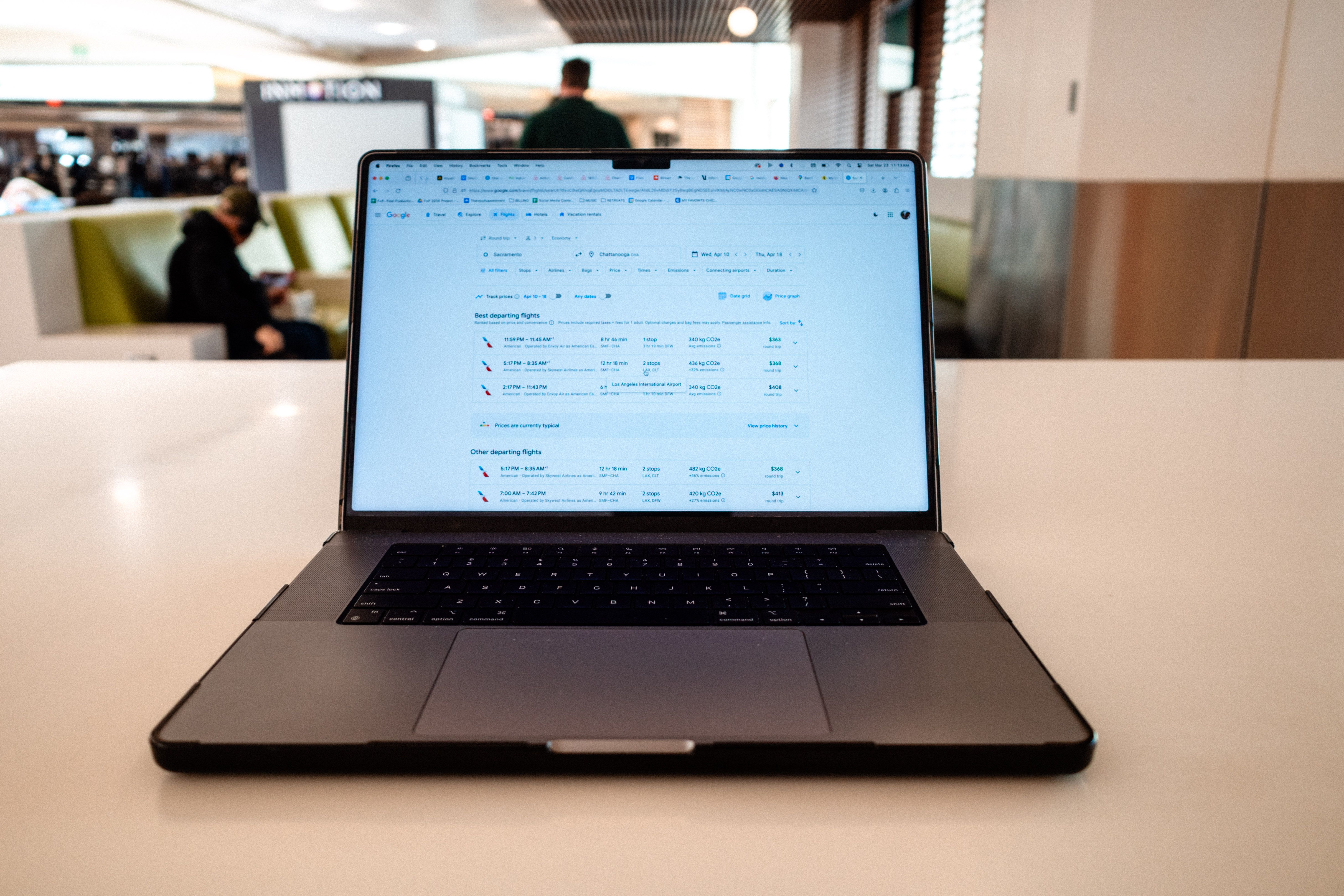
Credit-card travel portals (American Express Travel, Chase Ultimate Rewards, Capital One Travel) and online travel agencies like Booking.com and Expedia operate on transaction volume. They earn revenue when you book through their platform.
This creates a structural bias. The hotels and flights featured most prominently are often the ones with the strongest commercial relationship with the portal, not necessarily the best fit for your trip.
OTAs charge hotels roughly 15% to 25% in commission per booking. That’s a significant cut, and it means hotels sometimes hold back their best rooms or perks for direct bookings or advisor channels where the commission is lower (typically around 10%).
Credit card websites offer extra rewards in the form of points. You’re encouraged to book through the portal to earn or redeem points, which keeps you inside their ecosystem. The recommendations you see are filtered through inventory agreements, not editorial judgment.
This doesn’t mean portal bookings are bad. For simple, straightforward hotel stays (a reliable chain property for a two-night business trip), they work fine. But for complex itineraries, milestone trips, or properties where room assignment and upgrade potential matter, the portal has no mechanism to advocate for you. There’s no one calling the hotel on your behalf.
If you’re evaluating how to find travel recommendations through a portal, treat the results like search engine ads. They’re relevant, but they’re also paid placements.
Why Travel Advisors Have Different Skin in the Game
A travel advisor’s business depends on one thing above all else: whether you come back. If your trip goes badly, the advisor loses a client, and probably the referrals that client would have generated. That’s a fundamentally different incentive than a platform optimizing for clicks or a creator optimizing for views.
Hotels pay advisors about 10% of the room rate after the client completes the stay. Advisors also charge planning fees for complex independent itineraries (FIT, or free independent travel). The commission is the part that ties the advisor’s income to whether the trip actually went well. So there’s a direct financial relationship between the quality of your experience and the advisor’s income.
Advisors do tend to recommend properties where they have strong relationships. If an advisor knows the sales director at a hotel and knows that the director will upgrade their client and make them feel looked after, that property gets recommended over one where the advisor has no relationship, and the client might be treated as just another name on a register.
But here’s the thing. That bias actually works in your favor most of the time. The advisor’s relationship with the hotel is leveraged on your behalf. When something goes wrong (and things do go wrong), the advisor can pick up the phone and fix it because the hotel values that ongoing advisor relationship.
Some of the best properties have received difficult feedback from advisors and have gotten better because of it. That accountability loop doesn’t exist with a review platform or an influencer post. A dedicated travel advisor has a reason to hold hotels accountable because their own reputation rides on the outcome.
Tips for Verifying Travel Advice from Any Source
Reliable travel info doesn’t come from blindly trusting one source. It comes from cross-referencing and knowing what to look for. Here’s a practical framework for evaluating online travel reviews and recommendations from any channel.
Check the date. A glowing hotel review from 2019 tells you almost nothing about the property in 2025. Management changes, renovations, and ownership shifts happen constantly. Look for reviews and advice from the last 6 to 12 months.
Look for specifics. Trustworthy advice names the room category, the floor, the restaurant, and the time of year. Vague praise (“amazing hotel, great service”) is noise. Specific detail (“We had a garden-view room on the third floor, and the road noise was noticeable until about 11 pm”) is a signal.
Identify the business model. Ask yourself: How does this person or platform make money from this recommendation? If you can’t figure it out in 30 seconds, dig deeper.
Compare across sources. If an influencer, a review site, and an advisor all flag the same property positively, that’s a stronger signal than any single source. If they disagree, the reasons for disagreement matter more than the ratings.
Ask about accountability. What happens if the recommendation is wrong? A review site shrugs. An influencer moves on to the next post. An advisor who values long-term client relationships has a reason to make it right.
Travel advice from friends vs. online reviews is its own category. Friends have no financial incentive, which is good. But they also have different budgets, preferences, and tolerances for inconvenience. Your friend who loved a hostel in Lisbon might not be the best source for your anniversary trip.

How to Evaluate Online Travel Reviews Without Getting Burned
Review platforms like TripAdvisor and Google Reviews aggregate millions of opinions. That volume is both their strength and their weakness. You get a broad sample, but you also get fake reviews, outdated entries, and complaints from people whose expectations were unreasonable to begin with.
Fake reviews are a meaningful issue across online platforms. A 2021 World Economic Forum article, citing platform self-reporting and official figures from sites including TripAdvisor, Yelp, Trustpilot, and Amazon, estimated that roughly 4% of online reviews were fake on average.
weforum
Here’s what to watch for when evaluating review authenticity:
-
Clusters of five-star reviews posted within a few days of each other (often purchased)
-
Reviews that use identical phrasing or structure
-
One-star reviews that focus on a single incident rather than the overall experience
-
Reviewer profiles with no history or only one review ever posted
The best sources for travel advice on review platforms are detailed, mid-range reviews (three- and four-star) from reviewers with a visible history. These tend to be the most honest and specific.
And your mileage may vary on this one, but the most useful thing on TripAdvisor isn’t the star rating. They’re the photos uploaded by guests. Those unedited, poorly lit bathroom shots tell you more about a property than any professional gallery.
The Benefits of Travel Blogs (When They’re Good)
Travel blogs sit in an interesting space. The best ones combine personal experience with practical detail, the kind of ground-level specifics that review platforms and influencers often skip. A well-written blog post about a specific route through the Dolomites, for example, might tell you which guided experiences are worth booking and which trailhead has the better parking.
The challenge is that blogs often operate on ad revenue and affiliate links. A blog recommending a hotel might earn a commission if you book through its link. That’s the same incentive structure as an OTA, just dressed up in editorial clothing.
The benefits of travel blogs are real when the writer has really been to the place, names specific details, and discloses affiliate relationships. The benefits disappear when the blog is clearly written from a desk using other people’s content.
Look for blogs that mention seasons, weather, time of day, and specific logistical details (the 45-minute bus from the airport, the restaurant that requires reservations two weeks out). Those are signals of firsthand experience.
Putting It Together: A Decision Framework for Trusted Travel Advice Sources
The question isn’t which source is “best.” It’s which source is best for what you need right now.
What You Need | Best Source | Why |
|---|---|---|
Quick visual inspiration | Social media | Fast, visual, low-commitment browsing |
Simple chain hotel booking | Credit-card portal or OTA | Straightforward, points-eligible transactions |
Broad sentiment on a property | Review platforms | Volume of opinions, guest photos |
Detailed logistics and route planning | Specialized blogs | Ground-level, firsthand practical detail |
Complex itinerary, milestone trip, or VIP access | Accountability, advocacy, and supplier relationships | |
Event travel (World Cup, Olympics, Super Bowl) | Advisor with verified event partnerships | Guaranteed authentic tickets, integrated logistics |
For a two-night stay at a Marriott, you don’t need an advisor. Use your portal, earn your points, move on.
For a 10-day trip through Southeast Asia with your spouse or a World Cup package where ticket authenticity and hotel quality are non-negotiable, the calculus changes. You need someone whose business depends on getting it right, someone who’ll answer the phone when the flight gets canceled.
The Real Test of Reliable Travel Info
Every source of travel advice has a failure mode. Influencers fail when they prioritize content over accuracy. Portals fail when they optimize for their inventory over your needs. Review platforms fail when they can’t filter out fakes. Advisors fail when they stop listening to their clients.
The difference is what happens after the failure. A platform sends you a customer service form. An influencer doesn’t know you exist. An advisor who depends on your repeat business and your referrals has a direct, personal reason to fix the problem and make sure it doesn’t happen again. That accountability, built into the business model itself, is why trust in travel recommendations ultimately comes down to who has the most to lose when things go wrong.
Start with the kind of trip you’re planning. Match it to the source whose incentives align with your outcome. And if the trip matters enough that you’d be upset if it went sideways, work with someone who’d be upset too.
Frequently Asked Questions
How can I determine who to trust for travel recommendations?
Understanding the business model behind travel advice is key to knowing who to trust for travel recommendations. Each source, such as influencers, portals, and advisors, operates under different incentives. Evaluating these can help you make confident booking decisions.
What are the best sources for travel advice?
The best sources for travel advice depend on your needs. Social media provides visual inspiration, while review platforms offer broad sentiments. Travel advisors are ideal for complex itineraries, and specialized blogs provide detailed logistics and firsthand experiences.
How can you verify travel advice from any source?
To verify travel advice, check the date, look for specifics, and understand the business model behind the recommendation. Cross-referencing multiple sources and asking about accountability also ensures more reliable travel info.
Why should you trust a travel advisor?
Travel advisors have a vested interest in your satisfaction, as their business relies on repeat clients and referrals. Their relationships with suppliers can provide leverage to resolve issues, making them a trusted source for travel advice.
How to evaluate online travel reviews without getting burned?
Evaluate online travel reviews by looking for detailed, mid-range reviews from credible profiles. Be cautious of clusters of similar reviews and use guest-uploaded photos for a more accurate depiction of the property.
Raoul Didisheim
 Powered by TypeHero